


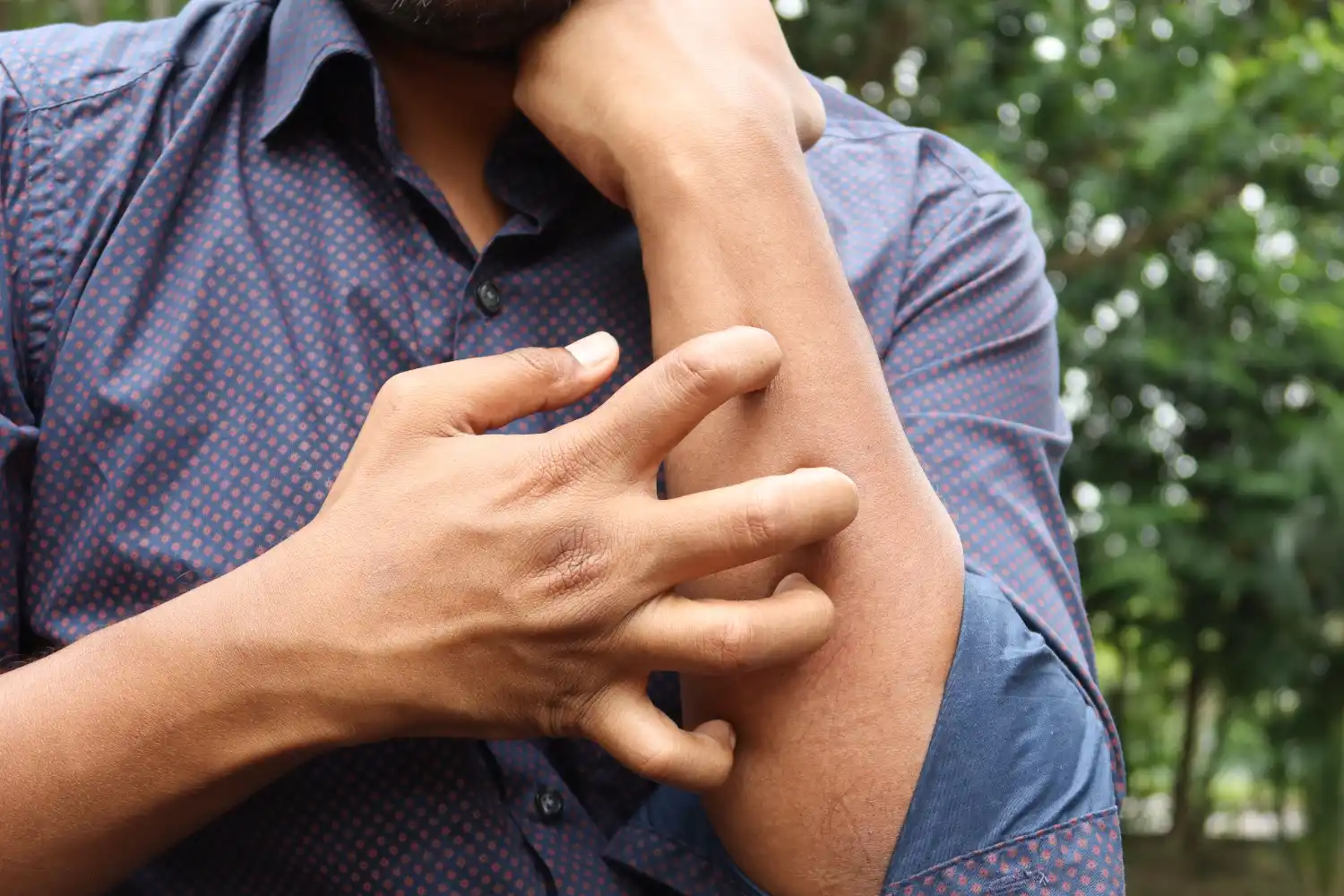
Neuropathic itch is one of the least recognised forms of chronic itch. It arises from damage along the nerves that carry itch signals, which is why the usual first response, an antihistamine, so often fails. It accounts for an estimated 8% of chronic pruritus cases, probably an underestimate, yet no therapy has been approved specifically for it. That unmet need defines a clear category gap in consumer health.
Why neuropathic itch does not respond to antihistamines
Histamine drives the itch of urticaria and allergies, but it is not the principal mediator of neuropathic itch. Here, itch originates from a lesion or disease of the somatosensory nervous system: damaged C-fibres fire spontaneously, and central sensitisation amplifies the signal. Antihistamines are therefore largely ineffective, although sedating versions may help indirectly by improving sleep.
Typical neuropathic itch symptoms include:
- Itch on normal-looking skin, hence chronic itching without rash; any neuropathic itch rash is usually secondary to scratching
- Burning, stinging or tingling alongside the itch
- A localised distribution, often following a dermatome
- Relief with cold, known in brachioradial pruritus as the ice pack sign
For neuropathic itch diagnosis, a five-item screening tool, including twinges and relief with cold, identifies it with 76% sensitivity and 77% specificity when two criteria are met.
Neuropathic itch causes: from shingles and diabetes to nerve compression
Neuropathic itch causes can sit anywhere along the itch pathway, from skin nerve endings to the brain:
- Shingles: itch affects 28-46% of patients in the acute phase and 32-68% in the chronic phase.
- Small fibre neuropathy: linked to diabetes, vitamin B12 deficiency and HIV, typically starting in the feet.
- Nerve compression: cervical spine disease underlies brachioradial pruritus on the forearms, thoracic impingement causes notalgia paresthetica on the upper back, and lumbosacral radiculopathy appeared in 80% of patients with unexplained anogenital itch.
- Central lesions: stroke, multiple sclerosis or tumours.
Neuropathic itch can signal an underlying condition, so dermatomal or paroxysmal itch warrants neurological assessment. Facial and vagus nerve involvement can even cause itch in the outer ear canal.
How neuropathic itch is managed today: topicals, oral drugs and their limits
There is no FDA-approved neuropathic itch treatment; current options rely on expert recommendation and off-label use:
- First line: topical menthol, pramoxine, capsaicin or lidocaine-prilocaine for mild or localised itch.
- Second line: gabapentin, pregabalin and antidepressants for moderate to severe or generalised itch.
- Third line: opioid modulators, botulinum toxin and NK1 antagonists for refractory cases.
Among oral options, gabapentinoids appear the most effective class for nerve-compression itch. Still, the limits are clear. Some oral drugs, such as gabapentin, cause sedation, dizziness and weight gain, while capsaicin burns during the first applications. A recent candidate, difelikefalin, improved itch in a phase 2 trial in notalgia paresthetica but missed its phase 3 primary endpoint.
No single neuropathic itch cream stands out: topical agents remain the first choice for localised symptoms. Tolerability is the weak point even at first line: capsaicin burns before it soothes, and anaesthetics only dull sensation temporarily. A well-tolerated topical that soothes quickly and supports the skin barrier would fill a clear gap.
The burden of chronic itch: night-time symptoms, sleep loss and duration
Chronic itch is often worst when patients try to rest. In a study of 800 dermatology patients, two thirds were poor sleepers. Among those with itch, 82.9% at least occasionally had difficulty falling asleep and 76.3% woke because of it. Itch intensified most often in the evening (41.7%) and at night (32.3%), and this nocturnal worsening independently predicted poor sleep.
An average itch score above 5 out of 10 predicted itch-related sleep disturbance, and patients with neuropathic itch commonly report average scores of 6.5-7.8. Neuropathic itch at night is therefore a frequent pattern. Nine percent of patients in the same study took sleeping pills regularly.
By definition, chronic itch persists for at least six weeks, and resolution depends largely on treating the underlying cause. Post-burn itch accompanies wound healing, but in most other forms itch reflects ongoing nerve dysfunction.
Neuropathic itch in consumer health: current options for symptom relief
For most people, neuropathic itch relief starts with self-care. Home remedies for neuropathic itch include avoiding skin irritants, wearing loose cotton clothing, keeping nails short and applying cold. Products with soothing agents such as menthol or polidocanol already feature in these general measures, making the pharmacy shelf a legitimate first step.
To work there, a product needs a clear mechanism, such as menthol’s cooling action on TRPM8 receptors, a formulation suited to repeated use on sensitive skin, and a regulatory classification that supports its claims across markets. That combination can bridge the gap between ineffective antihistamines and prescription neuromodulators.
At Mitelos, we have spent over a decade developing, registering and supplying clinically validated ear care consumer health solutions for partners in more than 25 countries, and we are now bringing that expertise to dermatology. Our pipeline includes MIT-802, an innovative, highly tolerable formula designed to offer a different approach to current itch treatments, with immediate soothing action and restoration of skin balance for long-lasting comfort.
If you are building an itch-relief offering, our team can walk you through our development capabilities, regulatory approach and partnering models.

References
Mashoudy KD, Brooks SG, Andrade LF, Wagner JD, Yosipovitch G. From compression to itch: exploring the link between nerve compression and neuropathic pruritus. Am J Clin Dermatol. 2025;26(1):23–33. doi: 10.1007/s40257-024-00898-5
Poddar S, Mondal H, Podder I. Aetiology, pathogenesis and management of neuropathic itch: a narrative review with recent updates. Indian J Dermatol Venereol Leprol. 2024;90(1):5–18. doi: 10.25259/IJDVL_846_2022
Spindler M, Przybyłowicz K, Hawro M, Weller K, Reidel U, Metz M, et al. Sleep disturbance in adult dermatologic patients: a cross-sectional study on prevalence, burden, and associated factors. J Am Acad Dermatol. 2021;85(4):910–22. doi: 10.1016/j.jaad.2021.04.015