

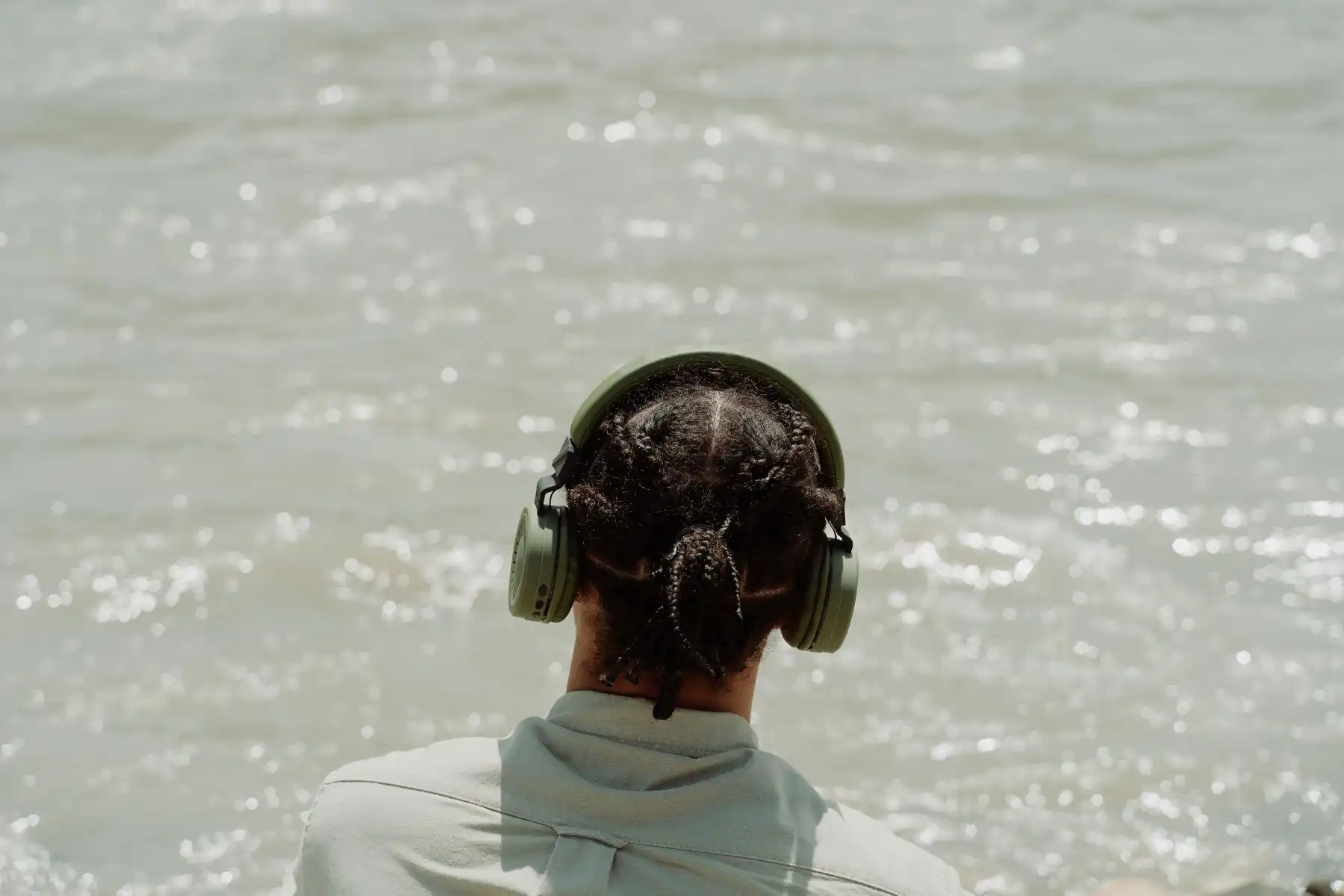
Once reserved for long-haul flights, noise-cancelling earbuds and over-ear models now accompany people on the commute, at the desk and in the library. That ubiquity has fuelled a lively debate: do noise-cancelling headphones cause hearing loss, or help prevent it? The answer is not yet clear-cut. Some audiologists have raised concerns about heavy use, while others highlight a protective effect: by blocking background noise, the technology lets users listen at lower, safer volumes. Yet hearing is not the only thing at stake. Like hearing aids, earbuds obstruct the canal’s natural self-cleaning mechanism, and prolonged earphone use has been associated with earwax buildup and fungal ear infections. Wearing earbuds for hours affects two things: the sound level reaching the cochlea, which depends largely on fit and chosen volume, and the ear canal itself, where prolonged use can be associated with earwax buildup. Knowing where the evidence stands shows which ear care needs are emerging and which belong on a pharmacy shelf.
The noise-cancelling paradox: do these headphones protect hearing or put it at risk?
Active noise cancellation (ANC) captures ambient sound through built-in microphones. It then emits an anti-noise signal of equal amplitude and opposite phase, cancelling much of that sound before it reaches the eardrum. It works best against steady, low-frequency noise such as engine hum, and is less effective against speech, traffic, and other unpredictable sounds.
When it comes to comparing earbuds vs headphones in terms of hearing loss, the format matters less than how much ambient noise each design lets through, and therefore how loud users turn the volume. Hoshina et al. (2022) compared four earphone types in simulated 80 dBA rush-hour subway noise:
- With both conventional earbuds and over-ear headphones, average preferred listening levels rose above 85 dBA, the level associated with hearing damage.
- Canal earphones with ANC kept listening levels below 75 dBA, and users did not need to turn the volume up significantly compared with listening in quiet.
In a real-ear study of canal earphones, Seol et al. (2022) found that switching ANC on reduced low-frequency sound pressure at the eardrum by roughly 12–14 dB. Participants also chose a significantly lower volume, an effect the authors partly credited to silicone tips sealing the canal.
So, to the question “can we get hearing loss from noise-cancelling headphones?” The answer is: not from the cancellation itself. As with any personal listening device, the risk lies in volume and duration. Some audiologists have also raised the question of whether heavy use might affect how the brain processes speech, a hypothesis that research has yet to explore.
For hearing health brand positioning, this sets a clear boundary around the limitations of noise cancellation: it protects hearing only indirectly, by enabling lower volumes. The defensible space for ear care lies in the ear canal.
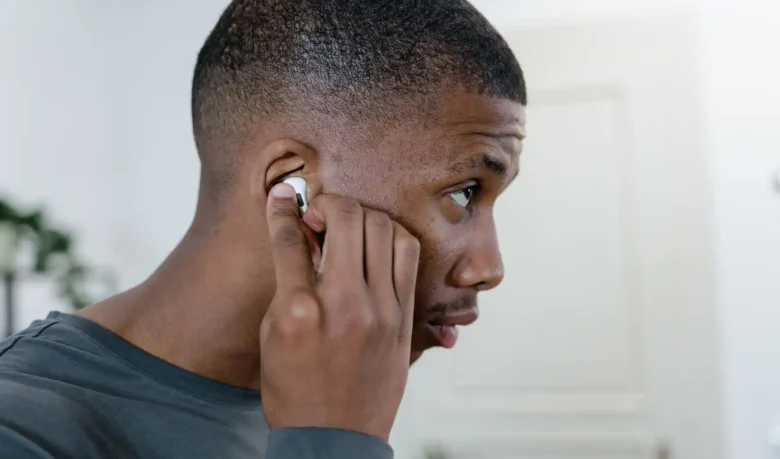
Usage habits and the limits of noise cancellation as hearing protection
Audiologists are clear that ANC should not be relied on as hearing protection, least of all around lawnmowers or construction work. Its benefit depends entirely on behaviour. Exposure limits are commonly set at 85 dBA over eight hours, and safe listening time halves with every 3 dB increase. Personal devices, meanwhile, have reported maximum outputs from 78 dB to over 130 dB. Audiologists often recommend the 60/60 rule: no more than 60% of maximum volume for no more than 60 minutes at a time.
For ear care portfolios, what matters is who these daily users are and what prolonged use means for their ear canals:
- Scale. Nearly half of teenagers and young adults in middle- and high-income countries are exposed to unsafe sound levels from personal audio devices.
- A younger profile. Clinicians report a rise in young adults presenting with hearing impairment. This is a segment beyond the older adults and hearing aid users that ear care planning usually targets.
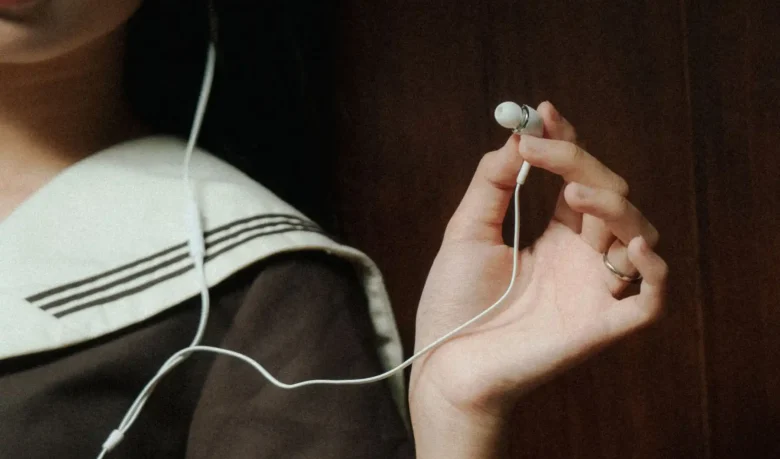
- Occlusion time. Earbuds worn for hours may interfere with the canal’s natural clearance, which helps explain why many users notice more earwax after wearing earbuds for long times. The same occlusion has been associated with cerumen impaction and otomycosis.
- Self-management habits. Cleaning earwax from earbud tips regularly limits earwax buildup. However, many users also turn to cotton buds for the canal itself, which pushes wax deeper.
The habits that shape hearing risk are, in other words, creating a large, young population with everyday ear canal needs.
Beyond noise exposure: where conductive hearing loss fits in an ear care portfolio
Noise-induced hearing loss is sensorineural. It results from damage to cochlear hair cells and their synapses, which makes prevention through safe listening habits the key strategy. Conductive hearing loss, by contrast, is where OTC ear care comes into play. It occurs when sound is not transmitted mechanically between the outer ear and the stapes footplate. One of its most common causes is obstruction of the canal by wax or debris. Unlike noise damage, hearing loss caused by earwax is reversible, with an excellent prognosis once the blockage is managed. That is why hearing assessment begins by ruling out wax, and why cerumen management is where OTC ear care comes into play.
For daily earbud users, the symptoms can easily be confused. Muffled hearing, aural fullness, or trouble following TV dialogue may be read as noise damage when the cause is impacted cerumen. Closing that gap is where OTC ear care fits:
- Positioning. The role is canal maintenance: softening wax, keeping the canal dry and supporting its natural barrier. These are claims that sit comfortably within OTC scope.
- Mode of action. Cerumenolytic formulations avoid mechanical intervention, such as cotton buds. These push wax deeper and are a recognised cause of tympanic membrane perforation.
- Format. Sprays and other convenience-driven formats suit a young, mobile population, much as they already serve hearing aid wearers.
- Pharmacy education. Clear referral criteria keep self-care safe and build professional confidence in the category. These include pain, discharge, sudden or one-sided hearing loss, and persistent symptoms.
Noise-cancelling headphones are here to stay, and so is the population wearing canal-occluding devices for hours each day. That creates a clear, evidence-based role for OTC ear care as a complement to safe listening habits.
At Mitelos, we have spent over a decade developing clinically validated ear care solutions for cerumen management, moisture control, and canal skin care, now sold in more than 25 countries. If you are building or expanding an ear care range for this segment, our team can walk you through our clinical documentation, regulatory package, and partnering models.

References
Dragan L. There’s no evidence that noise-cancelling headphones cause auditory processing disorder [Internet]. New York: Wirecutter, The New York Times; 2026 Feb 27 [cited 2026 Sep 24]. Available from: https://www.nytimes.com/wirecutter/reviews/auditory-processing-disorder-headphones/
Ghoshmoulic A, Deshmukh P. A study of hearing acuity and health of the external auditory canal in earphone users [version 1; peer review: awaiting peer review]. F1000Research. 2024;13:32. doi: 10.12688/f1000research.141954.1
Hastings M. Do noise-cancelling headphones help or hurt hearing? [Internet]. Aurora (CO): CU Anschutz Newsroom; 2025 Jul 10 [cited 2026 Sep 24]. Available from: https://news.cuanschutz.edu/news-stories/do-noise-cancelling-headphones-help-or-hurt-hearing
Hoshina T, Fujiyama D, Koike T, Ikeda K. Effects of an active noise control technology applied to earphones on preferred listening levels in noisy environments. J Audiol Otol. 2022;26(3):122–129. doi: 10.7874/jao.2021.00612
Jarry J. Harm from noise-cancelling headphones? More questions than answers [Internet]. Montreal: McGill Office for Science and Society; 2025 Feb 28 [cited 2026 Sep 24]. Available from: https://www.mcgill.ca/oss/article/medical-technology-did-you-know/harm-noise-cancelling-headphones-more-questions-answers
Seol HY, Kim SH, Kim GY, Jo M, Cho YS, Hong SH, Moon IJ. Influence of the noise-canceling technology on how we hear sounds. Healthcare (Basel). 2022;10(8):1449. doi: 10.3390/healthcare10081449
Sooriyamoorthy T, De Jesus O. Conductive hearing loss. In: StatPearls [Internet]. Treasure Island (FL): StatPearls Publishing; 2023 [cited 2026 Sep 24]. Available from: https://www.ncbi.nlm.nih.gov/books/NBK563267/