


Microbiome modulation strategies in ear care for non-prescription treatments
The ear canal is far more than a passive conduit for sound. It is a dynamic ear canal environment populated by a resident microbial community that actively defends the host against infection. As evidence accumulates linking microbial imbalance to ear conditions, such as otitis externa and other auditory disorders, interest is growing in microbiome modulation as a practical tool for non-prescription ear care. Understanding how the ear microbiome functions (and how it fails) offers a compelling rationale for prevention-focused, consumer health strategies that go beyond conventional antiseptic or antibiotic approaches.
Factors driving microbial imbalance in the ear canal environment
Ear microbiome imbalance can arise from multiple interacting triggers, and understanding these is essential for designing effective prevention:
- Moisture: excess water in the ear canal environment elevates pH, reduces the efficacy of antimicrobial cerumen components, and creates conditions that favour pathogenic overgrowth. Ear infection risk associated with ear moisture excess is particularly elevated in swimmers and in individuals who use hearing aids, which restrict ventilation and reduce microbial diversity.
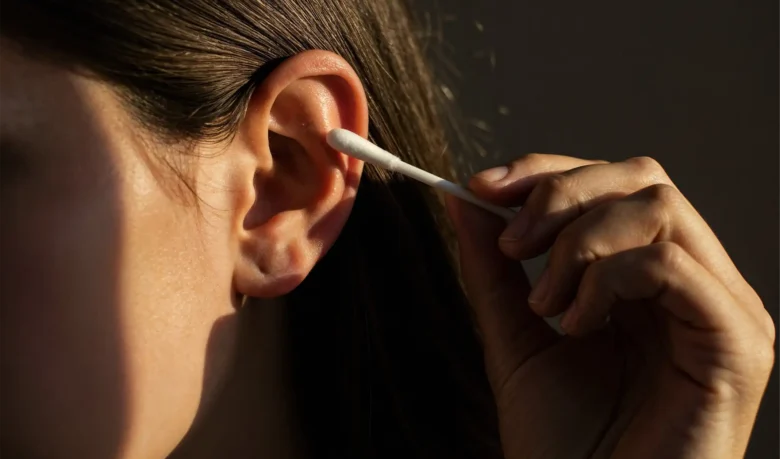
- Mechanical disruption: ear‑cleaning habits (like cotton swabs use) measurably alter the microbiome composition of the healthy canal. Scratching or repeated insertion of earphones, also physically damages the epithelial layer and displaces the natural cerumen barrier, reducing colonisation resistance.
- Antibiotic overuse: broad-spectrum antibiotic therapy (whether systemic or topical) disrupts the ear’s normal microbiome and can predispose individuals to secondary infections, including otomycosis.
- Systemic and immune factors: there is growing evidence of a gut-ear connection, whereby gut dysbiosis can influence systemic immune tone, inflammatory mediator levels, and ultimately the susceptibility of peripheral tissues, including the ear, to infection.
- Genetic factors: Polymorphisms in the ABCC11 gene determine cerumen type (dry vs. wet), which in turn influences canal pH, lipid composition, and resident microbial community structure. Individuals with wet-type earwax appear more susceptible to certain infections.
Common ear canal disorders caused by microbial dysbiosis
Otitis externa microbiology is directly shaped by shifts in the ear canal ecosystem. Compared to healthy controls, patients with chronic bacterial otitis externa show significantly reduced microbial diversity and richness, a pattern now recognised as a hallmark of dysbiosis rather than simple pathogen acquisition. The dominant pathogens are in fact present at low levels in healthy ears; it is the collapse of the commensal community that permits their expansion.
Bacteria that causes ear infection are not always external invaders. Staphylococcus aureus disrupts epithelial integrity through alpha-toxin activity, while Corynebacterium spp. upregulate TLR2 and pro-inflammatory cytokines including IL-1β and IL-6, sustaining local inflammation even at low titres. Meanwhile, itchy ears causes infection cycles, where scratching damages skin, introduces opportunistic organisms, and triggers further irritation, being therefore a clinical manifestation of this dysbiotic spiral. Persistent ear microbiome disruption has also been linked to otomycosis, particularly following antibiotic overuse, which selectively removes bacterial competitors and creates space for fungal overgrowth.
Preventive ear care: non-prescription strategies for protecting microbial balance
Microbiome modulation therapies in ear care are an emerging area, and several evidence-based non-prescription strategies show promise for maintaining or restoring ear microbiome improvement.
The gut-ear connection offers one of the most compelling lines of evidence. Dietary interventions that support systemic microbiome influence ear health, particularly omega-3 fatty acid consumption and Mediterranean diet adherence, have demonstrated measurable effects on vascular health and systemic inflammatory tone, which could plausibly benefit cochlear function. Probiotic strains including Lactobacillus rhamnosus and Streptococcus salivarius K12 have reduced acute otitis media incidence and antibiotic dependence in clinical trials, reinforcing that ear microbiome improvement can be achieved through both systemic and local strategies.

At the canal level, the science identifies several non-prescription mechanisms with robust clinical support:
- Preserving cerumen integrity: current evidence suggests that most individuals do not require routine earwax removal. Preserving the natural cerumen barrier maintains the colonisation-resistant ear canal environment that defines a healthy ear.
- Supporting canal dryness reduces pH elevation and pathogen proliferation associated with moisture ear infection risk.
- Maintaining ear normal microbiome stability through avoidance of unnecessary antibiotic exposure preserves the microbial diversity that underpins colonisation resistance.
At Mitelos, our product development is grounded in exactly this scientific framework: the understanding that microbiome modulation and canal physiology are inseparable from long-term ear health. Our clinically validated, evidence-based consumer health solutions are designed to work with the ear canal’s natural biology, maintaining the conditions in which the ear’s normal microbiome can provide effective colonisation resistance, while offering partners market-ready interventions for the prevention of external ear infections.
If you are looking to build a consumer health portfolio that translates the latest ear canal physiology evidence into differentiated products, we invite you to reach out.

References
Burton M, Krumbeck JA, Wu G, Tang S, Prem A, Gupta AK, Dawson TL Jr. The adult microbiome of healthy and otitis patients: Definition of the core healthy and diseased ear microbiomes. PLoS One. 2022 Jan 24;17(1):e0262806. doi: 10.1371/journal.pone.0262806.
Duan T, Li Z, Han X, Hong Q, Yang Y, Yan J, Xing C. Changes functional prediction of ear canal flora in chronic bacterial otitis externa. Front Cell Infect Microbiol. 2024 Oct 23;14:1434754. doi: 10.3389/fcimb.2024.1434754.
Godur DA, Denton AJ, Eshraghi N, Mittal J, Cooper J, Moosa M, Mittal R. Modulation of Gut Microbiome as a Therapeutic Modality for Auditory Disorders. Audiol Res. 2023 Oct 10;13(5):741-752. doi: 10.3390/audiolres13050066.
Paprocka P, Spałek J, Daniluk T, Kaliniak S, Durnaś B, Okła S, Bucki R. The Importance of Ear Canal Microbiota and Earwax in the Prevention of Outer Ear Infections. Int J Mol Sci. 2026 Jan 8;27(2):622. doi: 10.3390/ijms27020622.