


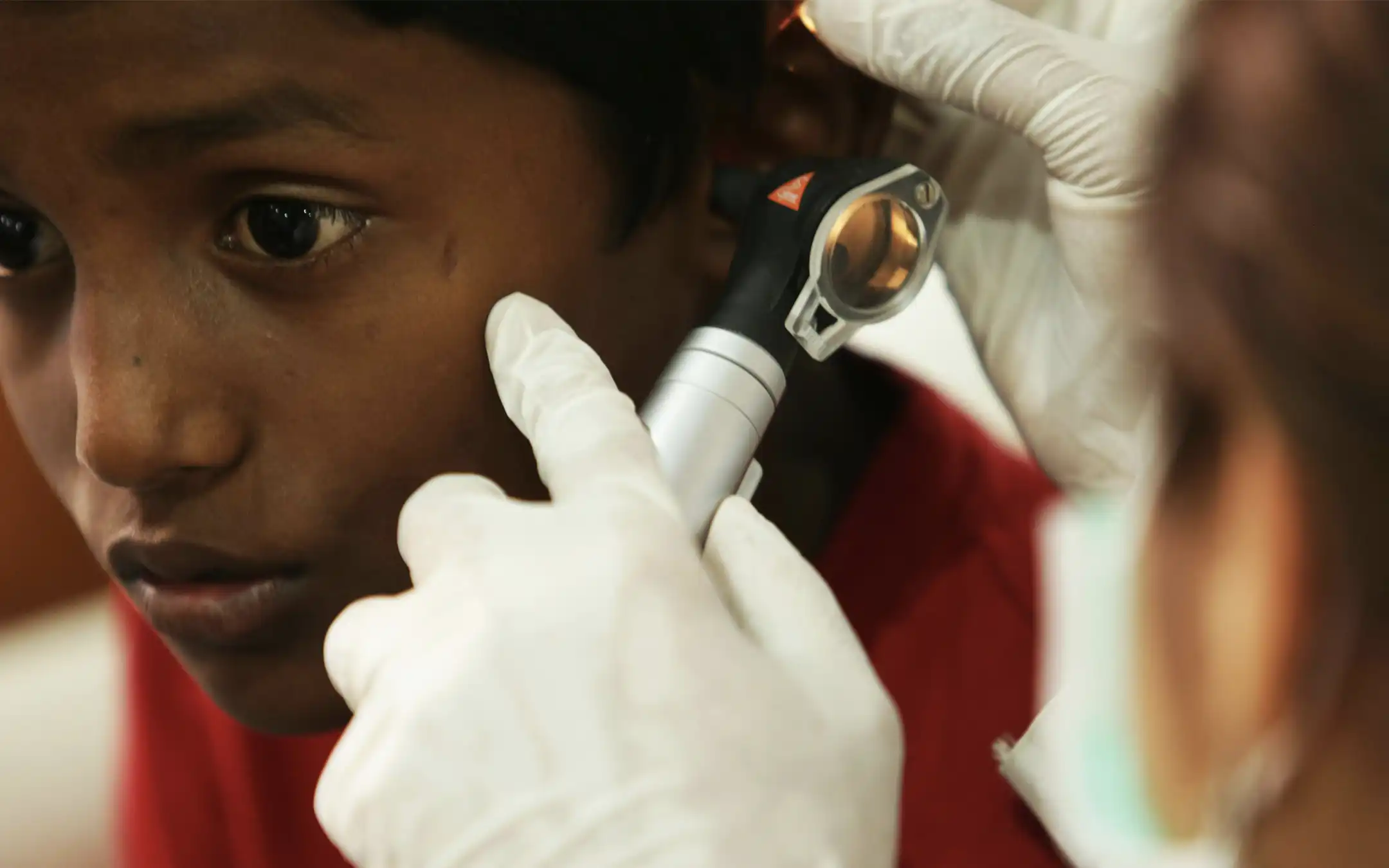
Pediatric ear care products: Market potential, clinical considerations and strategic entry for OTC partners
The global expansion of consumer health is increasingly shaped by prevention and family-centred self-care. Within this landscape, pediatric ear care represents a segment with sustained demand and strong pharmacy relevance. Parents and caregivers are increasingly seeking specialised, evidence-based solutions to manage common ear conditions at home.
This demographic offers a unique opportunity to build long-term brand loyalty, provided the products meet the dual requirements of pediatric safety and ease of use. Understanding the physiological nuances of the developing ear and the specific parental concerns while providing safety and regulatory compliance is essential for any successful commercial entry into this niche.
Pediatric ear conditions: Common symptoms and causes
The pediatric population is uniquely predisposed to ear-related issues due to the anatomical orientation of the Eustachian tube, which is shorter and more horizontal than in adults, facilitating the migration of pathogens from the nasopharynx. Consequently, pediatric ear infection treatment remains a primary concern for caregivers.
Beyond infections, pediatric ear, nose and throat (ENT) specialists frequently see cases of cerumen impaction, which can cause significant discomfort and temporary conductive hearing loss in addition to preventing the proper examination of the ear canal and eardrum. Common causes of buildup in children include narrower ear canals that hinder the natural migration of wax or the inappropriate use of cotton swabs, which pushes wax deeper toward the tympanic membrane.
Additionally, children may be less able to communicate symptoms of earwax blockage, which can delay diagnosis and treatment. Identifying these triggers is vital for developing a pediatric ear care portfolio that addresses both acute symptoms and long-term prevention. In some instances, recurring infections or persistent fluid in the tympanic cavity lead to pediatric ear tube surgery, a procedure that creates a specific “aftercare” market for specialised protection, such as pediatric earplugs, to prevent water ingress during bathing or swimming.

Safe earwax management in children: Clinical guidance and parental myths
Clinical management of cerumen in children requires a cautious approach that prioritises the integrity of their delicate skin and the eardrum. Despite clinical warnings, many caregivers often resort to suboptimal methods, such as searching for reviews on forums of dubious reliability that sometimes even recommend dangerous practices like cleaning with hydrogen peroxide, which, despite being a common cerumenolytic, can be irritating to the sensitive canal of a child.
Evidence-based protocols suggest a shift toward safer, non-irritating solutions or specialised medical devices. When addressing the best earwax management strategy for kids, clinicians generally recommend:
- Cerumenolytic softening: Using a standardised solution that softens the wax without aggressive chemical compounds.
- Avoidance of mechanical trauma: Educating parents on what they should not do when removing earwax, specifically avoiding the insertion of any solid objects.
- Moisture control: Ensuring the ear remains dry to prevent otitis externa, particularly for children prone to swimmer’s ear.
Regarding earwax management drops for toddlers, the emphasis must be on products that allow the pharmacist to provide a solution while identifying “red flags” that require a pediatric ear doctor.

Regulatory challenges in pediatric OTC ear care
Entering the pediatric market requires navigating a complex regulatory landscape where safety profiles and age-specific indications are paramount. Unlike the adult market, where consumer preference often drives Stock Keeping Unit (SKU) selection, the pediatric segment is heavily influenced by professional recommendations and strict labelling requirements.
A significant hurdle for pediatric ENT innovation is that many devices used in children are currently used “off-label,” having been originally designed and cleared for adult populations without specific pediatric clinical data.
To gain pharmacy shelf space for ear drops for kids, products must overcome several strategic barriers:
- The “pediatric gap” in development: There is a persistent lack of financial incentives for manufacturers to conduct pediatric-specific trials. The smaller market size and higher perceived risks often lead to inheritance technology, where an adult pediatric earwax management tool is simply scaled down without accounting for the unique biomechanical and physiological needs of a child.
- Substantiation of pain claims: Traditional pediatric ear pain treatment options often face labelling silos. Regulatory bodies require rigorous evidence to prove that a device or drop is safe for the developing ear canal.
- Human factors and administration: Pediatric ear drop administration protocols are highly scrutinised. Device design must account for use errors by caregivers. The delivery system must be intuitive enough to prevent injury even if a child resists or moves suddenly during the process.
Launching pediatric ear care products: Timing, partners and portfolio strategy
A successful commercial launch in the pediatric ENT space depends on both a high-quality and safe formulation and a strategic alignment with the patient journey. Timing often coincides with the back-to-school or the start of the swimming season, when the incidence of ear-related complaints peaks.
Strategically, a robust pediatric ear care portfolio should include:
- Preventative hygiene solutions.
- Post-surgical or protective accessories, such as pediatric earplugs for children who have undergone pediatric ear tube surgery.
- Advanced softening agents that act as a first-line pediatric earwax management tool before using other procedures.
Success in this category is achieved by building trust with the parents. By offering products that bridge the gap between home remedies and specialist intervention, OTC brands can position themselves as essential components of the modern family’s healthcare kit.
At Mitelos, we specialise in identifying the clinical gaps that allow our partners to lead in the consumer health area. Our expertise in developing and out-licensing high-quality, evidence-based ENT solutions ensures that your portfolio meets the rigorous safety and efficacy standards required for the pediatric demographic.
We provide the scientific foundation and market-ready products needed for a successful international launch, so we invite you to collaborate with us to translate pediatric auditory science into your next commercial success.

References
Espinoza J, Shah P, Nagendra G, Bar-Cohen Y, Richmond F. Pediatric Medical Device Development and Regulation: Current State, Barriers, and Opportunities. Pediatrics. 2022 May 1;149(5):e2021053390. doi: 10.1542/peds.2021-053390
Rosenfeld RM, Tunkel DE, Schwartz SR, Anne S, Bishop CE, Chelius DC, Hackell J, Hunter LL, Keppel KL, Kim AH, Kim TW, Levine JM, Maksimoski MT, Moore DJ, Preciado DA, Raol NP, Vaughan WK, Walker EA, Monjur TM. Clinical Practice Guideline: Tympanostomy Tubes in Children (Update). Otolaryngol Head Neck Surg. 2022 Feb;166(1_suppl):S1-S55. doi: 10.1177/01945998211065662
Schwartz SR, Magit AE, Rosenfeld RM, Ballachanda BB, Hackell JM, Krouse HJ, Lawlor CM, Lin K, Parham K, Stutz DR, Walsh S, Woodson EA, Yanagisawa K, Cunningham ER Jr. Clinical Practice Guideline (Update): Earwax (Cerumen Impaction). Otolaryngol Head Neck Surg. 2017 Jan;156(1_suppl):S1-S29. doi: 10.1177/0194599816671491